
FDRHPO Completes Pediatric Oral Health Pilot with Significant Regional Impact
Fort Drum Regional Health Planning Organization (FDRHPO) has successfully completed its one-year pediatric oral health pilot program, funded by a Rural Health Grant from Fidelis Care. The initiative, launched to address persistent barriers to pediatric dental care in the North Country, resulted in substantial increases in preventive oral health services and education.
The pilot was launched in response to a well-documented regional need. Outpatient visits for dental caries (also known as cavities) in the tri-county area are significantly higher than the New York State average, primarily due to limited dental provider availability, long wait times, and barriers related to transportation, insurance, and awareness. To overcome these barriers, FDRHPO partnered with a local practice, Pediatric Wellness of Northern New York (PWNNY), to integrate preventive oral health services directly into pediatric primary care and to initiate a broader regional education and distribution plan.
“This project builds upon regional efforts to bolster the dental workforce by seeking to leverage primary care settings as another avenue to promote pediatric oral health,” shared Joanna Loomis, NCI deputy director at FDRHPO. “This approach aims to reach children who may not be seeing a dentist regularly or at all, but who are engaged with primary care. Getting fluoride varnish treatment, education and information, and a dental hygiene kit from primary care can set kids up for both short-term and long-term positive oral health.”
Expanded Access to Fluoride Varnish Treatment and Dental Supplies
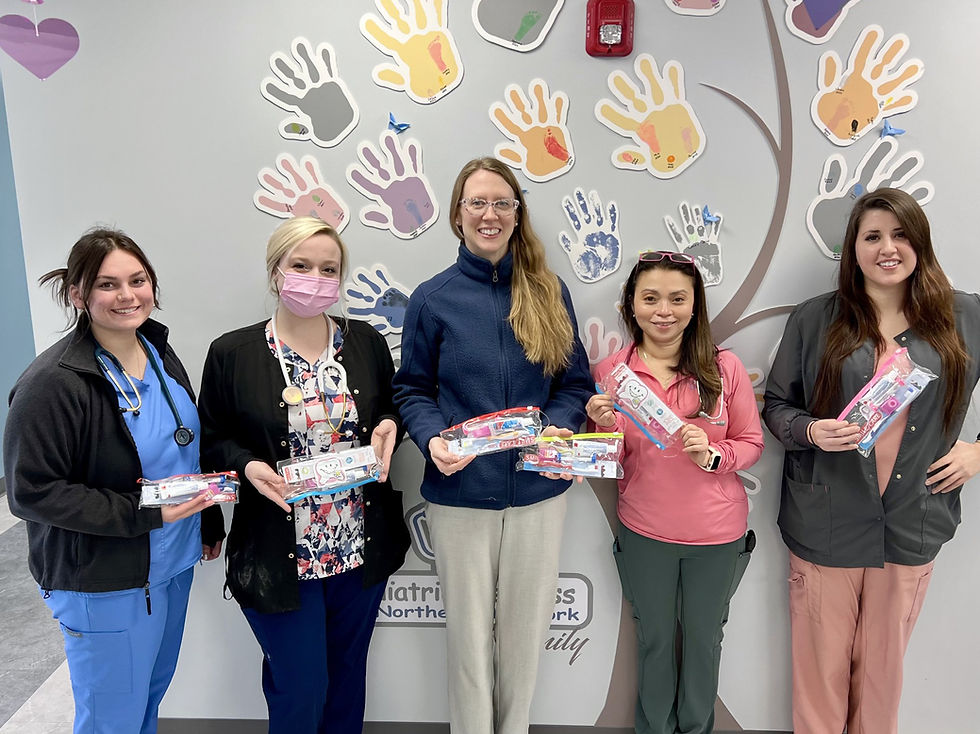
A key part of the pilot focused on increasing access to fluoride varnish treatment (FVT), a proven preventive method that reduces the risk of tooth decay when applied at least quarterly, starting with a child’s first tooth. In 2025, PWNNY provided 169 fluoride varnish treatments to pediatric patients, a more than 480 percent increase from the 29 treatments in 2024. At the same time, PWNNY distributed 309 children’s dental hygiene kits and integrated oral health education into routine visits through brochures, referral information for regional dentists, and an educational video produced by FDRHPO to engage patients while they wait for their appointments.
“Patients and parents were very appreciative of the fluoride treatment and the kits, especially the ones who do not see a dentist,” said Dr. Myla Estepa, MD, at Pediatric Wellness of Northern New York. “A few families were frustrated because a lot of dentists do not take Medicaid insurance.”
To support this work, FDRHPO purchased 2,300 fluoride varnish kits and distributed them to primary care practices across the region to support broader adoption of fluoride varnish services. Claims data will be analyzed to assess how frequently FVT has been billed regionally, providing insight into utilization beyond the pilot site and informing future sustainability efforts.
FDRHPO also purchased 2,520 children’s dental hygiene kits, each containing a pediatric toothbrush, a timer to encourage better brushing habits, floss, and toothpaste. Kits were distributed to other primary care practices, public health departments, and school-based health centers across the region.
Regionwide Education and Community Outreach
Beyond clinical settings, the pilot emphasized early education and community-based prevention. Over 5,000 brochures on daily dental hygiene habits, fluoride varnish treatment, and regional dental resources, each paired with trial children’s flossers, were distributed to school districts across the region for K-3 students.
To further strengthen access to information, FDRHPO developed and published a dedicated pediatric oral health resource page on its website, offering providers, organizations, families, and caregivers centralized educational materials and regional referral information. This resource remains publicly available at https://www.fdrhpo.org/pediatricdentalhealth.
FDRHPO also organized a “lunch and learn” educational event in October 2025, bringing together representatives from seven partner organizations to share pediatric oral health best practices, prevention strategies, and lessons learned from the pilot. This forum supported cross-sector collaboration and reinforced alignment with regional oral health initiatives, including the Keep the North Country Smiling Coalition, facilitated by Jefferson County Public Health.
Allison Roselle, Deputy Public Health Director at Jefferson County Public Health, says that the Pediatric Dental Health Initiative that FDRHPO completed last year is an important component of the mission and work plan of the Keep the North Country Smiling (KNCS) Coalition.
“The KNCS Coalition brings together health departments, dental providers, schools, and health and human service agencies across Jefferson, Lewis, St. Lawrence, and Oswego counties to keep oral health at the forefront of community and public health work,” said Roselle. “Our mission is to improve the oral health of residents by uniting community partners to close gaps in care. We are dedicated to integrating oral health into primary care, expanding and protecting evidence-based prevention, strengthening the regional dental workforce, and empowering families through education and outreach.”
Strengthening Data, Workflows, and Sustainability
In addition to service delivery and outreach, the pilot supported system-level improvements. Pediatric Wellness of Northern New York created a new electronic health record report to more effectively track the percentage of patients who received routine dental care in the past 12 months, enhancing data-driven decisions and facilitating better follow-up and referrals.
“I think there are more patients now actively looking for a dentist since we reminded them of how important it is to have regular dental care. They also appreciated the list of providers that they can contact to set up an appointment,” said Dr. Estepa.
FDRHPO will continue to share workflows, resources, and lessons learned from the pilot, including insights on reimbursement and return on investment, with pediatric and primary care practices across the region. These efforts aim to sustain and expand the integration of preventive oral health services within primary care beyond the grant period.
Dr. Estepa says she plans to run a report on how many of their patients are now set up with a dentist following the pilot program.
“We have been more proactive about adding the dental provider to the patient’s chart. This is a work in progress, but I will run the report a year after the pilot study,” said Dr. Estepa.
Through strategic partnerships, targeted investments, and a focus on prevention, the Fidelis Care-funded pediatric oral health pilot showed measurable improvements in access, awareness, and regional readiness to meet children’s oral health needs. The successful completion of this initiative marks a significant step toward reducing preventable dental disease and promoting healthier futures for children across Northern New York.

Comments